
Integrating Individual Growth Into Couples Therapy


Love isn’t just two people. It’s two histories, two sets of wounds, and two hearts carrying old hurts. And yet, you try to build something beautiful together. Integrating couples therapy and individual growth lets you pause, notice your patterns, and respond instead of react. The relationship shifts because both of you grow individually and together.
Why Individual Growth Matters in Couples Therapy
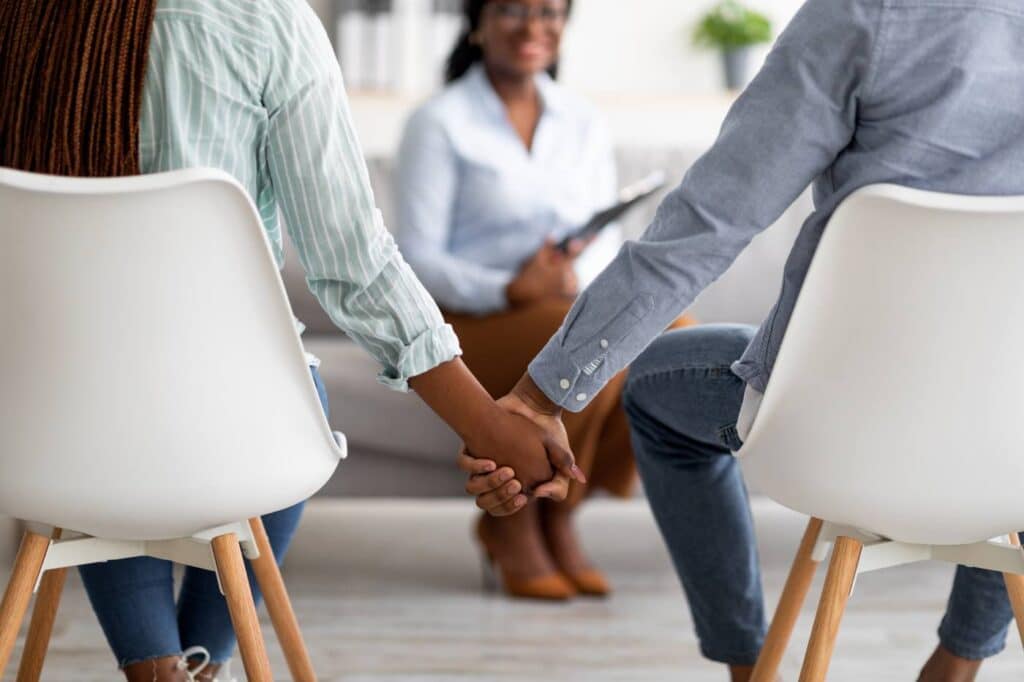
Most people walk into couples therapy thinking the goal is to fix us. And it is. But the fastest way to heal a relationship dynamic is to help each person pursue personal growth at the same time.
When one partner does their own inner work, understanding their triggers, taking responsibility for their reactions, learning to communicate what they actually need, the whole relationship shifts. You can’t pour from an empty cup, and you can’t show up fully for someone else if you haven’t started showing up for yourself. Personal growth, inside a relationship, might be the most generous thing you can do.
How Personal History Shapes Relationship Patterns
How does personal trauma affect romantic relationships? Think about the home you grew up in. Was love shown loudly or quietly? Was conflict handled openly or buried under silence? Were you taught that needing things was okay, or that you should figure it out alone?
You learned all of this before you were old enough to question it. And now, without even realizing it, you’re playing out those same lessons in your relationship dynamic. If you grew up where love felt unpredictable, you might grip your partner tightly out of fear. If you learned that emotions meant chaos, you might shut down the moment things get tense.
Can couples therapy help with personal issues? Yes. A marriage counselor or family therapist can help you see these patterns clearly, so they stop running the show without your permission. This is where understanding individual therapy vs. couples therapy can make a big difference in how you approach personal growth both on your own and together.
The Role of Self-Awareness in Healthy Partnerships
How does self-awareness improve relationship communication? Self-awareness is one of the quietest superpowers in a healthy relationship. When you understand yourself, what triggers you, what you need to feel loved, and what your fears look like, you stop being a mystery even to yourself. And when you’re clear about who you are, it becomes easier for your partner to truly reach you.
Think of a moment when you said something hurtful that you didn’t fully mean. Maybe you were tired, or scared, or carrying something heavy that had nothing to do with the argument in front of you. Self-awareness doesn’t mean you never have those moments. It means you can catch them sooner, name them honestly, and come back to your partner.
How to know when couples therapy is the right step: Couples therapy creates a safe space to build that muscle. Many marriage counselors consider self-awareness the foundation of all lasting personal and relational growth.
Balancing Individual Needs and Relationship Needs
How do you balance personal needs and relationship needs? You are two separate people who have chosen to build a shared life. That means your needs matter, and so do theirs. And sometimes those needs will pull in different directions.
One of you needs quiet time to decompress. The other needs connection after a hard day. One of you wants to talk about the future. The other is still trying to get through the week. Neither of you is wrong. But without awareness and communication skills, those differences can slowly turn into distance.
It’s also natural to wonder, can individual therapy and couples therapy happen at the same time? The answer is yes, and in many cases, they can complement each other. Individual work with a marriage counselor or couples therapist can support your personal growth, while couples therapy helps you bring that growth into the relationship.
Your needs are valid. So are your partner’s. The goal isn’t for one person to win. It’s to find a rhythm that honors you both.
Addressing Anxiety, Trauma, or Attachment Wounds in Couples Work

Can couples therapy help with anxiety or emotional regulation? Sometimes what looks like a relationship issue is actually a personal wound that got reopened. Anxiety, past trauma, and attachment injuries don’t disappear when you fall in love.
If you grew up feeling abandoned, you might panic when your partner needs space. If you’ve been betrayed before, trust might feel impossible no matter how safe your partner actually is. If anxiety is part of your daily life, it might show up as control, reassurance-seeking, or walls so high your partner can’t get close.
What role does attachment style play in couples therapy? It often shapes these reactions more than we realize. Couples therapy and couples counseling that integrates individual work, guided by skilled mental health professionals, creates space to gently name what’s happening and build both individual and mutual understanding. When your partner begins to see that your reactions come from old wounds rather than a lack of love, compassion can start to replace frustration.
How Emotional Regulation Strengthens Connection
You cannot have a genuine conversation when your nervous system is in full alarm mode, heart pounding, thoughts racing, body braced for impact. The part of your brain that handles empathy and nuance goes offline.
Emotional regulation is the ability to feel your feelings without being completely taken over by them. It allows you to pause, breathe, and return to the moment before saying or doing something that creates more damage. When both partners work with mental health professionals or family therapists in couples therapy, they can develop stronger communication skills. Fights become shorter, recovery becomes faster, and conversations that once ended in shutdown or explosion start to feel manageable and even productive together.
When Individual Therapy Supports Couples Therapy
How does individual healing strengthen long-term relationships? Sometimes the most loving thing a couples therapist can do is recommend that one or both partners also see someone individually.
Deep trauma, grief, addiction, depression, or severe anxiety often need focused individual attention from mental health professionals. When those needs are supported in a dedicated one-on-one space, couples therapy or couples therapy sessions can become more grounded and effective. By addressing personal growth individually, instead of everything spilling into the relationship at once, some of that weight is held and worked through, making it easier to show up with more presence, clarity, and care for each other.
Avoiding the Blame Cycle Through Personal Accountability
When everything is someone else’s fault, nothing ever changes because change requires ownership. Personal accountability in a relationship means being willing to ask: What did I bring to this moment? What could I have done differently? What am I responsible for here?
That question takes courage. It’s also one of the most powerful ways couples therapy and Emotionally Focused Therapy (EFT) for couples supports personal growth and strengthens communication skills. When both partners practice it, the blame cycle begins to break. Instead of two people pointing fingers, you have two people standing side by side, looking at the problem together.
Supporting Your Partner’s Growth Without Losing Yourself
Loving someone who is growing can be disorienting. They’re changing. The relationship dynamic is shifting. And sometimes it can feel like the ground beneath you is moving.
Supporting your partner’s personal growth doesn’t mean erasing your own needs or becoming invisible in the process. It means celebrating their progress while staying grounded and having honest conversations about how that change feels for both of you. When two people grow into fuller versions of themselves, couples counseling can help the relationship grow alongside them.
How Couples Therapy Encourages Both Personal and Shared Change
Should partners work on themselves during couples counseling? Absolutely. Couples therapy can transform not just your relationship, but your personal growth. The insights you gain about your patterns, needs, and wounds carry into every conversation, and so does your partner’s. That’s the quiet miracle of integrating individual growth: the relationship improves, and you grow into a more self-aware, compassionate partner.
If you’re ready, book a free consultation with one of our couples therapists—a gentle place to begin, where you’ll be met with care, understanding, and support as you move forward together.